Sititaly

Advice, trends and news
on the world of seating

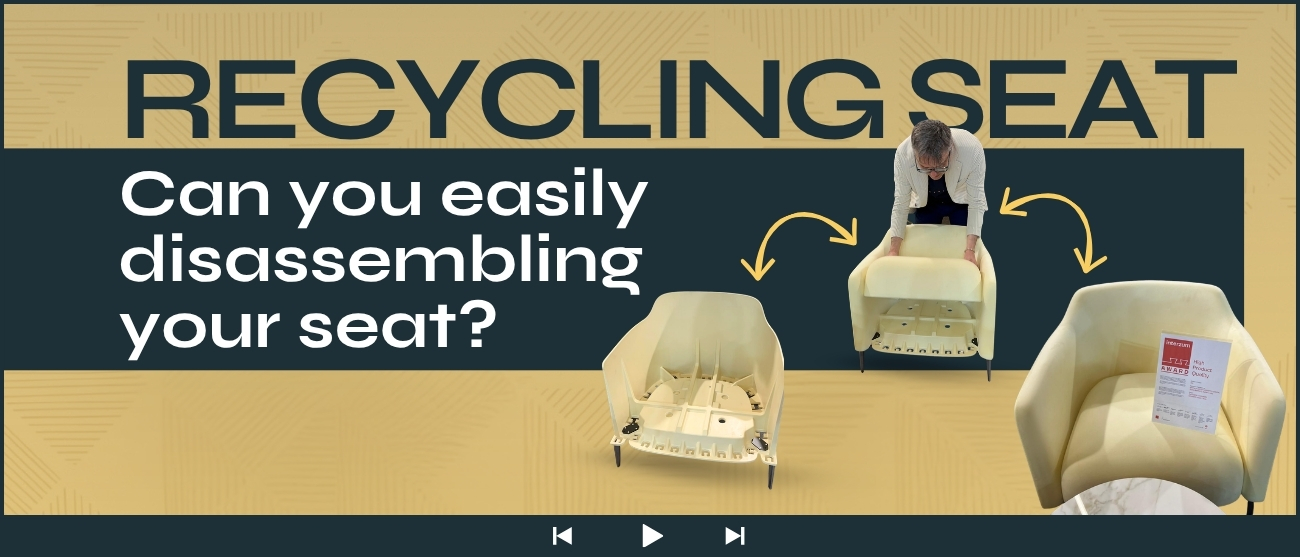
When we talk about sustainable seating, one fundamental aspect is often overlooked: the ability to disassemble products at the end of their lifecycle.

Recycling traditional chairs is far more complex than it may seem. The different materials involved and the way components are assembled make separation processes slow, costly, and ultimately unsustainable.

Sititaly’s approach challenges this logic.

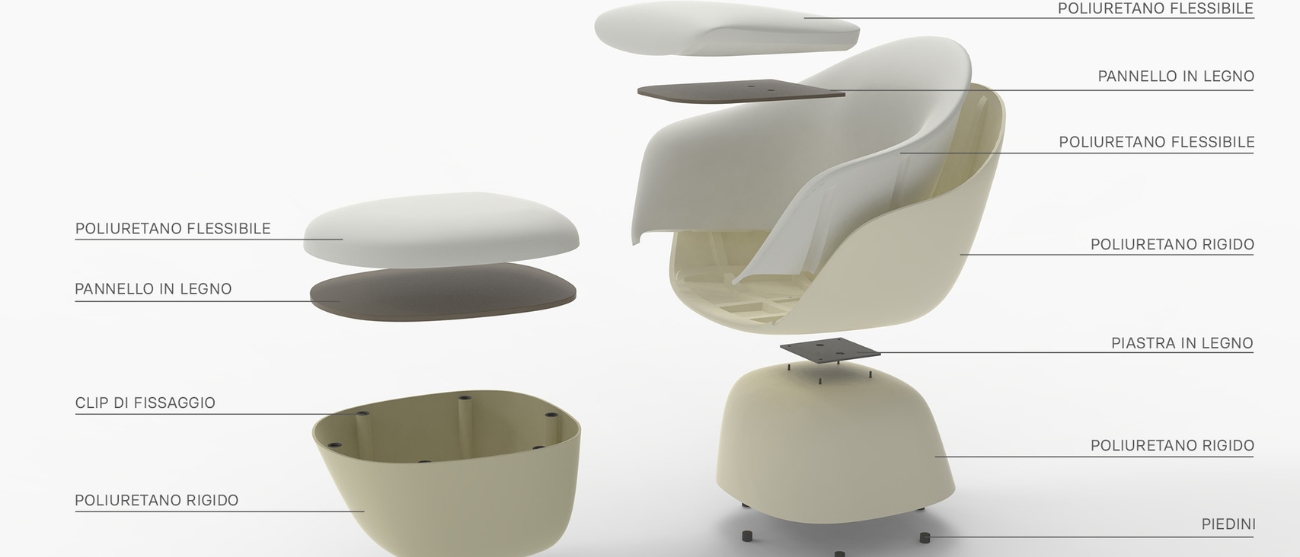
By using structural rigid polyurethane, we eliminate the need for metal frames and permanent bonding, simplifying both assembly and disassembly.

This allows us to create seating solutions that are more durable, designed for easy recycling, and with a significantly reduced environmental impact.

Looking to develop a truly sustainable collection—without compromising on comfort and design?

With Sit With Us, we collaborate with companies and designers to create seating solutions conceived from the outset to respect the planet.

Book your free consultation today and let’s start shaping the future of sustainable design together.

From 2029 on, the European seating market will be regulated by legislation that introduces stringent requirements for durability, repairability and recyclability. The ESPR (Ecodesign for Sustainable Products Regulation), approved by the European Commission in July 2024, represents one of the pillarsof the Green Deal of the Circular Economy Action Plan.

The furniture field is among the priorities of the first Working Plan 2025-2030. According to the official timeline, the specific delegated regulation will be adopted in 2028, while effective implementation – that is, compliance for products placed on themarket – will start in 2029.

ESPR extends the scope of the previous Ecodesign Directive (2009/125/EC), which was limited to energy-related products. It now covers virtually all physical goods sold in the European Union, with a few exceptions regulated separately (foods, drugs, medical products).

The stated goal is twofold: to reduce the environmental impact ofproductsthroughout their life cycle and accelerate the transition towards a circular economy. For the furniture sector, this translates into five main areas of intervention.

The five pillars of compliance

1. Durability and repairability

Products should be designed to withstand time and to allow routine maintenance. The legislation aims to counter planned obsolescence and promote business models based on product longevity.

2. Recycled or bio-based content

The requirement for recycled or renewable material in materials such as polyurethane is estimated to be around 30%. Companies that rely exclusively on virgin fossil fuels will need to rethink their supply chains.

3. Separability of components

To enable selective recycling at the end of life, the design should facilitate the disassembly of different parts such as structure, padding, and cladding. Permanent assemblies with structural adhesives will no longer be compatible with the new standards.

4. Digital Product Passport (DPP)

Each product will be equipped with a “digital passport” containing information on material composition, origin, environmental impact, repair instructions and end-of-life. The system will ensure full traceability along the supply chain.

5. Minimum Environmental Criteria (CAM)

To participate in public tenders -contract, hospitality, office sectors – it will be mandatory todemonstrate compliance with CAM. Those who do not meet these criteria will automatically be excluded from the award procedures.

What happens to those who are not ready

The impact of legislation will not be uniform. Companies that already operate with circular logic will have an immediate competitive advantage. Those who continue to design according to linear models (production-use-disposal) will face significant adjustment costs.

The market surveillance authorities of the Member States will have the power to block the marketing of non-compliantproducts, to order recall and to impose sanctions. The legislation also provides for transparency obligations: companies will have to disclose the quantities of unsold products destroyed and the reasons.

For non-EU producers exporting to the EU market, the same rules will be applied without exception. The Commission has stated that it will carefully assess the implications for trading partners, but confirmed that there will be no exemptions.

How did Sititaly anticipate 2029?

At Sititaly, we have been operating in accordance with the principles that will become mandatory in 2029. Our decision to focus on molded polyurethane seats comes from the belief that this material, when combined with design intelligence, offers the needed attributes for a circular model: monomateriality, separability, durability, and repairability.

Take our IDA Lounge as an example. It has been designed with a completely reusable rigid polyurethane BIO 7R shell, a removable coating system without the use of glues, and a component that the end consumer can replace independently. This approach corresponds exactly to what ESPR requires in terms of design for disassembly and circular economy.

In terms of materials, we already supply bio-based polyurethane in different percentages: 7R as standard, 20R on request, and30R will be also available soon, anticipating future regulatory requirements. In parallel, we are working on LCA (Life Cycle Assessment) certifications for each of our product lines, with the aim of obtaining complete EPDs (Environmental Product Declaration) that guarantee maximum transparency on environmental impact.

We are not adapting to a regulation. We are building products that will be relevant and competitive when that legislation is fully in place.

Design today to sell tomorrow

There are three years left to prepare. Those who can anticipate will transform a constraint into an advantage. Those who wait risk being out of business.

We at Sititaly are ready to accompany you on this journey. Through our Sit With Us service, we support you in the co-design of chairs that already meet ESPR requirements: from concept stage to 3D mathematics, from prototyping to industrial production.

Contact us to design tomorrow’s session together.

Nowadays, when someone chooses a seat for their office, hotel or home space, they look for four specific things:

  1. Ergonomic comfort and total personalization: people spend hours sitting on a chair and, therefore, request pieces of furniture that fit their body, not the other way around.
  2. Extreme lightness: rearranging spaces, moving furniture and optimizing logistics are daily needs in a rapidly changing world.
  3. Safety for health: hypoallergenic materials, breathable and free of toxic substances that guarantee people’s well-being in indoor environments.
  4. Concrete sustainability: no declarations of intent, but products that are recyclable, repairable or rebuildable.

There is a material that perfectly meets all four of these requirements: polyurethane.

When we sit on a good polyurethane chair, we can perceive what is the result of a real chemistry between materials’ chemistry and industrial design.

It is a feeling that is difficult to describe with words but immediate to comprehend for the body: balanced solidity, precise elastic return, strength held over time that allow the seat to not deform.

In 2026, polyurethane isno longer just the “hidden heart” of modern seating but has become the undisputed protagonist of a change that involves design, sustainability and industrial performance.  

Especially for those who produce furniture, we no longer talk about a simple “filling” material, but a complete technology that allows lightness, flawless aesthetic performance and – above all – constant production repeatability.

The secret that few companies have understood: All in one material

There is a technological leap that few have really understood and applied: smartly combining the two souls of polyurethane to create entirely mono-material seats.

On the one hand rigid expanded polyurethane, which permanently replaces frames in iron or other metals, offering structural strength with a drastically reduced weight. On the other hand, flexible foams guarantee that superior comfort that only a quality padding can give.

But the real innovation lies in the use of them both together: Sititaly was among the first companies in Italy to apply this approach, designing seats entirely in polyurethane – supporting structure and padding- thus eliminating the complexity of multi-material assemblies and guaranteeing uniformity, consistent precision and performance.

For a manufacturer, the advantages are concrete and immediate: no variability from batch to batch as with wood or metal, only total control over shape, aesthetic performance and comfort. Moreover, lightness that makes handling and logistics infinitely easier.

BioPoliurethane: the silent revolution 

Bio-polyurethane confirms itself as the main character in 2026. 

When we talk about this material, we are not interested in compromises: the performance is identical totraditional polyurethane, but with a radically better environmental profile.

For those who produce seats, this opens decisive scenarios: responding to the increasingly stringent demands of public tenders, distinguishing themselves with products certified with less environmental impact, anticipating European regulations that reward the circular economy.

MDI, CFC-free processes and the future of production safety

There is another technical aspect making a difference in the final quality of the seats in 2026: the type of polyurethane used and the molding process.

MDI BIO polyurethanesfor rigid parts and RECYCLED flexible polyurethane foams for soft parts are now an advanced industry standard.

Much attention is paid to materials that exploit expansion processes that do not include the use of toxic substances such as chlorofluorocarbons (eliminated from the sector already years ago), guaranteeing safety for those who produce and for those who will use the session.

Sititaly: when the vision of the future becomes a real project

Being aware of the potential of polyurethane is one thing. Knowing how to apply it in the design and production of seats is something else.

We at Sititaly work with two major categories of polyurethane, strategically choosing them according to their function:

  • Flexible foam (RECYCLED polyurethane on request) for soft and comfortable padding.
  • Rigid BIO polyurethane foam as a structural material instead of metal frames.

Each seat is designed to take full advantage of the characteristics of this material: we define precise volumes, guarantee ergonomic fit, ensure industrial repeatability withoutvariations in quality. All of this with a green vocation that is a real daily productive choice.

The advantages of Sititaly polyurethane are tangible

  • Durability: it maintains its characteristics over time without deterioration.
  • Versatility: total design freedom on shapes, thicknesses and densities.
  • Eco-friendly: separation of components, no toxic substances, processes that respect the environment.

This approach brings concrete benefits for producers and contract operators:

  • Ready-made or semi-finished seats,with constant quality standards.
  • Support in the development of custom solutions based on polyurethane foam.
  • Possibility of customizing comfort, density and finishing touches without loweringproductivity efficiency.

Our role is that of a bridge: on the one hand the science of materials, with its continuous evolutions, on the other the avant-garde design which seeks formal freedom without compromises on durability and sustainability.

2026 is the year in which the true value of a chair cannot be seen: it is felt. In the comfort that lasts for hours. In the lightness that simplifies everything. In the safety for health. Knowing that you have chosen a material that looks to the future.

If you are looking for a partner who can turn polyurethane into a real competitive advantage for your seating projects, we at Sititaly are ready to work with you.

Contact us for a personal consultation.Throughour Sit With Us service, we accompany you in the design of the perfect seat for your business: from the first stages of the concept to industrial production, combining functionality, style and sustainability.

To make a design seat truly special, you cannot focus only on aesthetics. It’s essential to choose the right techniques, innovative materials, and to embrace a long-term vision.

This is how smart design can guarantee aesthetics, functionality, and drastically reduce waste and environmental impact.

At Sititaly, the key element behind an award-worthy seat is rigid polyurethane, a material that provides precision, durability, and recyclability.

A clear example is our Micol Lounge R1, winner of the Interzum Award 2024: made of rigid polyurethane, it allows us to eliminate waste, reduce replacements to a minimum, and at the same time maintain high levels of comfort and aesthetics.

Sit With Us is our dedicated service for those who want to develop winning seating solutions: book your free consultation with our team today!

The creation of a long-lasting chair often depends on smart engineering and on using fewer components and joints that tend to wear out over time.

This is how sustainability and excellence can be combined and transferred into seating.

At Sititaly, when we design your seating, we take into account:

  • sustainable and recyclable materials, especially rigid polyurethane,
  • an intelligent design engineered with the lowest possible number of components,
  • a system that allows the seat to be refurbished without having to manufacture a new one.

This design approach ensures your seating has a long service life and, as a result, a low environmental impact.

Book a free consultation with Sit With US and discover how we can turn your idea into a high-performance seat tailored to you.

The first edition of Interzum Forum Italy, the leading exhibition dedicated to the latest innovations in subcontracting for furniture and interior design, has just ended; on 6 and 7 June, the Bergamo Fair was the stage of this highly anticipated international event signed Koelnmesse.

We at Sititaly will remember this year for a long time since our Micol lounge R1has been awarded at the Interzum Forum Italy Award 2024 for the ESG & Sustainability category.

The jury, composed of international experts in environmental matters, technological innovation and trend setting, awarded the model signed by Sititaly for its innovative character and its concern regarding environmental sustainability. The durability of the product has been particularly appreciated, because, thanks to its design and construction materials, it exceeds the idea of the “disposable” seat at the end of life. This model opens new reflections in the world of seating: at the end of its use we no longer think only about how to recycle the construction materials, since 80% of the one that makes up the body is reusable. It will be enough to replace the flexible parts and the seat will basically become new.

And this is one of the reasons that led the jury to reward us and to include our model among the products that will guide future developments in the supply chain.

Interzum 2024 trends: innovation and sustainability

In this first Italian edition, which hosted 200 exhibitors from 20 countries, numerous solutions to the current problems of the sector were presented, with an eye to the future of the supply chain in the furniture industry.

After the exceptional growth in 2021-2022, the Italian furniture industry has suffered a natural slowdown, amplified not only by the global situation weakened by the decline in demand and the increase in the prices of raw materials and components, but also the need to introduce innovative solutions to respond to the growing awareness of consumers towards digitalization and sustainability.

For this reason, Italian furniture manufacturers today prioritize investment in product research and innovation, focusing on service-oriented strategies and business models. The search for innovative solutions has led to great results, which are projected into a digital and sustainable future, with news and trends in the subcontracting sector that have been the protagonists during Interzum Forum Italy 2024.

Between Talks, Trend stage and Product stage this first edition presented a variety of themes and formats to meet all the needs of the sectors involved. Among the 2024 trends we observed a strong interest in:

  • Innovative materials: the use of recycled and sustainable materials is increasing. At Sititaly, in fact, we presented our polyurethane seats, demonstrating how sustainability can go hand in hand with design and comfort.
  • Advanced technology solutions: digitalization of production processes and integration of new technologies can improve product efficiency and quality.
  • Design and functionality: increasing attention to ergonomic and functional design, which responds to the demands of an increasingly demanding market.

Sititaly in step with the 2024 trends

In an edition that saw sustainability and innovation at the forefront, we could only show the innovative solutions, in terms of materials and construction systems, that we put in place to create products that meet both aesthetic and functional needs.

In fact, the models on display are the result of our continuous research on the sustainability of the product, which translates into a constructive system that promotes the separability of the components during disposal (ideal to optimize the recycling phase) as well as the possibility to reuse materials.

Interzum was an opportunity to share our vision with the public, contributing to the discussion on future trends in the industry. In addition, many visitors were able to experience our free service “Sit with us”, a technical consultancy that allows companies to transform the idea of a chair into a tangible reality, optimizing the project in all its phases, avoiding low-performing alternatives that could cause waste of time and money.

The problem of the disposal of seats in the field of interior design and furniture production is complex and directly challenges the objectives of sustainability and recycling today increasingly demanded by the final consumer.

Traditionally, chairs are built using a variety of materials that – although they offer aesthetics and functionality – present significant difficulties in separation and recycling at the end of life. This issue not only complicates the recycling process but also has a direct impact on the environment, contributing to the increase in waste and inefficient use of resources.

Technical challenges in seats disposal: an in-depth analysis

To effectively address the technical challenges of seats disposal, it is crucial to understand the complexities that characterize the separation of their components. We will now explore in detail the obstacles that furniture manufacturers encounter in the recycling and disposal process, highlighting the urgency of adopting innovative and sustainable approaches in seating design.

• Complex composite structures

Many chairs’ models include composite structures that melt metals, plastics and other materials that are not easily separable. This makes the disposal process particularly complex and expensive, with a significant environmental impact due to the difficulty of efficiently recycling components.

• Metal frames

Metal frames, often used to ensure the strength of the seats, represent a significant challenge in the disposal phase.

Their separation from the flexible part of the chair, typically made of polyurethane foam or other materials, requires specialized processes that are not always available or economically sustainable.

• Permanent bonding

The practice of permanently bonding materials to ensure stability and durability further complicates the separability of components. These glues make it almost impossible to disassemble the chair completely, greatly limiting the possibilities of recycling.

• Non-recyclable materials

Many materials used in chairs’ production are not easily recyclable or require specific processes that are not universally available. This means that, even when it is possible to separate materials, there is not always adequate recycling infrastructure to treat them sustainably.

• High disposal costs

The complexity of separating and recycling the components of traditional seating results in high disposal costs. These costs are often passed on to consumers or must be absorbed by producers, increasing the final price of the product and limiting its competitiveness on the market.

• Environmental Impact

In addition to economic costs, there is a clear environmental impact linked to the production and disposal of traditional seating. The difficulty in recycling materials contributes to the accumulation of waste in landfills, the emission of greenhouse gases during disposal processes and the decrease in biodiversity due to the excessive use of natural resources.

Sititaly’s solution: a revolutionary construction system

Sititaly has been able to innovate the seating sector with a cutting-edge construction system that focuses on sustainability. The key to this transformation is the use of structural rigid polyurethane instead of traditional metal frames, which are often difficult to separate and recycle.

This innovative approach not only facilitates the separability of end-of-life components – promoting more effective recycling – but significantly reduces the ecological footprint of products.

In addition, the use of polyurethane allows greater freedom in design, allowing the creation of seats that are distinguished by aesthetics, comfort and sustainability.

Sititaly’s polyurethane system’s advantages

• More design freedom

Thanks to the versatility of polyurethane, Sititaly overcomes the limits imposed by traditional materials, offering a wide range of shapes and thicknesses that meets the most diverse aesthetic needs.

• Simplification of construction

By eliminating the need for wood slats for the tissue and reducing the number of components, the production process becomes easier and less impacting on the environment.

• Personalized comfort

The construction system of Sititaly allows to create seats with optimized comfort zones, adapting the density of the flexible foam according to specific ergonomic requirements.

• Durability and design integrity

The polyurethane guarantees a greater resistance of the edges and the absence of deformation in the curved areas, while maintaining the aesthetics of the seat over time.

Sititaly’s commitment to sustainability

The adoption of structural rigid polyurethane and biopoliurethane for flexible parts reflects Sititaly’s commitment to sustainable and environmentally friendly solutions. This choice highlights the company’s willingness to actively contribute to the circular economy, designing products that minimize environmental impact without compromising quality and design.

This is why Sititaly extends an open invitation to designers, manufacturers and companies to explore together the possibilities offered by its innovative solutions. Through the free consultation “Sit with Us”, it is possible to collaborate to create seats that not only meet the aesthetic and functional needs of the contemporary market, but that are also tangible examples of sustainability and innovation.

This invitation represents a unique opportunity to reinvent the concept of sitting, harmoniously combining design, comfort and environmental responsibility.

“Sit with Us” is more than a consultation; it is a shared path towards a future in which each session contributes to defining a new standard of beauty, functionality and respect for the planet.

The future of interior design is tinged with green, with a new awareness that guides consumer choices and the vision of manufacturers.

Change is already taking place: innovative materials, advanced production processes and a philosophy that focuses on sustainability are transforming the way we think and create seating.

This is a moment of evolution, where technology and respect for the environment meet to give life to products that are not only functional and stylistically satisfying, but also harmonious with the planet we live on.

In the framework of this positive panorama, new trends and solutions emerge that respond to the need for a more conscious production. Today, the quality of a chair is measured not only through comfort and aesthetics but also through the commitment to a minimal environmental impact.

The dialogue between industry and nature has never been so fruitful, and the fruits of this collaboration are in everyone’s eyes: products that last longer, require less resources and that, at the end of life, are returned to the earth with less resistance.

Sustainability and design: the future of chairs is in polyurethane

The furniture industry has long been synonymous with waste of resources: precious wood destined to become waste in a short time, production processes with high CO2 emissions and products that are difficult to recycle at the end of their useful life. These aspects, no longer negligible, affect the environment in which we live, altering ecosystems and biodiversity.

In addition, consumer demand for sustainable products is steadily increasing, prompting the market to review its production standards and move towards greener solutions.

Faced with this challenge, innovation becomes the key to a sustainable future. The use of alternative materials and production processes with lower environmental impact is the horizon towards which to move.

It is in this context that polyurethane emerges as a revolutionary material.

Resistant, versatile and recyclable, it offers a concrete answer to the problems of sustainability of the production of seats. The industrial process based on this innovative material not only reduces the environmental impact during the manufacturing phase but also facilitates disposal and recycling, helping to close the product life cycle responsibly.

This material, with its remarkable resilience and flexibility of use, is a valuable ally in the race towards a greener production.

Polyurethane can withstand everyday wear and maintain its aesthetic and functional qualities over time; but it is also versatile, adapting to a wide range of designs and technical requirements, from the most minimalist and modern to the most classic and ornate.

Clean production: Sititaly’s sustainable innovation

The polyurethane revolution does not stop at its practical appearance and its aesthetic adaptability. It is in the life cycle of the product that it can fully demonstrate its ecological value.

And we at Sititaly know that.

Sititaly polyurethane is in fact designed to be recyclable, which means that – unlike other materials that end up in landfills at the end of their usefulness – it can be reused or transformed.

This significantly reduces the amount of waste and allows resources to have a second life, in line with the principles of the circular economy.

In addition, Sititaly’s polyurethane chair manufacturing process is carefully calibrated to minimize harmful emissions and energy consumption. By using advanced technologies and cutting-edge production methods, we can reduce the environmental impact typically associated with creating new products.

Finally, when it comes to disposal, a Sititaly chair is just as outstanding. At the end of its useful life the components can be easily separated and recycled, further reducing the accumulation of waste. This facilitates an efficient and less expensive recycling process, which not only respects the environment but also allows the preservation of valuable natural resources.

Each Sititaly chair is designed, therefore, thinking not only of functionality and comfort but also of its complete life cycle: from the choice of materials, all traceable and selected for their low environmental impact, until the end of their use, when they can be easily recycled.

Our seating range is not just a design object, but a manifesto of a future-oriented production ethic.

We invite you to personally discover Sititaly’s commitment to a greener tomorrow. Book a free consultation through our service “Sit with Us” and let yourself be guided to discover how sustainability and design can live in harmony.

It is an opportunity to touch the materials and the innovation of our seats and to contribute, together with us, to a more environmentally friendly world.

In the age of ecological awareness, the interior design sector is confronted with a complex and concrete problem: the disposal of seats.

Every year, millions of chairs are decommissioned, contributing significantly to pollution and generating high costs for waste management.

The life cycle of a chair often ends in landfill, where non-biodegradable and sometimes toxic materials can take decades to decompose, while releasing harmful substances into the environment.

The weight of these discarded chairs does not only weigh on the shoulders of the planet but also affects the logistics and economy.

The transport of large volumes of waste involves a massive use of resources and the emission of greenhouse gases, while waste management requires investment in infrastructure and disposal technologies.

It is a vicious circuit in which the economic cost is directly proportional to the environmental impact: the more waste to be managed, the greater the damage to our ecosystem.

However, the trend is changing thanks to the introduction of innovative and sustainable materials.

Research into eco-friendly and easily recyclable materials has become a priority for future-oriented designers and manufacturers.

Raw materials such as polyurethane foam, recycled PET and polypropylene are offering new possibilities to create chairs that are not only beautiful and functional but that can also boast a respectable ecological profile.

Sustainable revolution: polyurethane and the future of recycling in seating design

Polyurethane, a versatile polymer, is emerging as the ideal candidate to address the growing need for sustainability in seating design.

This polymer, known for its extraordinary lightness and resistance, goes beyond the traditional expectations of durability and functionality, offering significant advantages also in terms of recyclability.

What makes polyurethane particularly attractive is its ability to be brought back to its original chemical components. This depolymerization process is a relatively new and fascinating frontier in material science, allowing polyurethane to be recycled several times without a significant loss of quality or performance.

Unlike other polymers that often end up in landfills or that, at best, can only be downcycled – ie processed into products of lower quality – the polyurethane offers the possibility of a true “closed” recycling. This means that abandoned chairs can not only be dismantled but also transformed into new products of equal value, in a real circular economy. This extended life cycle drastically reduces the amount of waste produced and, consequently, the environmental footprint of the furniture industry.

Despite its many qualities, polyurethane also faces challenges, such as the need for specialized recycling processes and the responsible management of products at the end of life. However, with the increasing emphasis on environmental responsibility and the continuous improvement of recycling technologies, polyurethane is establishing itself as a long-term sustainable solution for the furniture industry and beyond.

Sititaly welcomed this challenge with enthusiasm, proposing a line of seats made entirely of polyurethane. This choice is not just a statement of style but bears witness to a corporate ethic that puts the environment first.

Sititaly chairs, in fact, combine design, comfort and a sustainable life cycle, offering customers the opportunity to boost their business without compromising ecological.

If you are also looking for solutions that fully embrace the philosophy of complete recycling, we invite you to discover our innovative line of polyurethane chairs.

Book now a free consultation through our “Sit with us” service to explore how we can together transform the future of sustainable design. Sititaly is not just a choice, it is a step towards a greener tomorrow.

Subscibe to newsletter

Fill out the form to stay up-to-date on the world of polyurethane seats and the news from Sititaly.