Sititaly

Advice, trends and news
on the world of seating

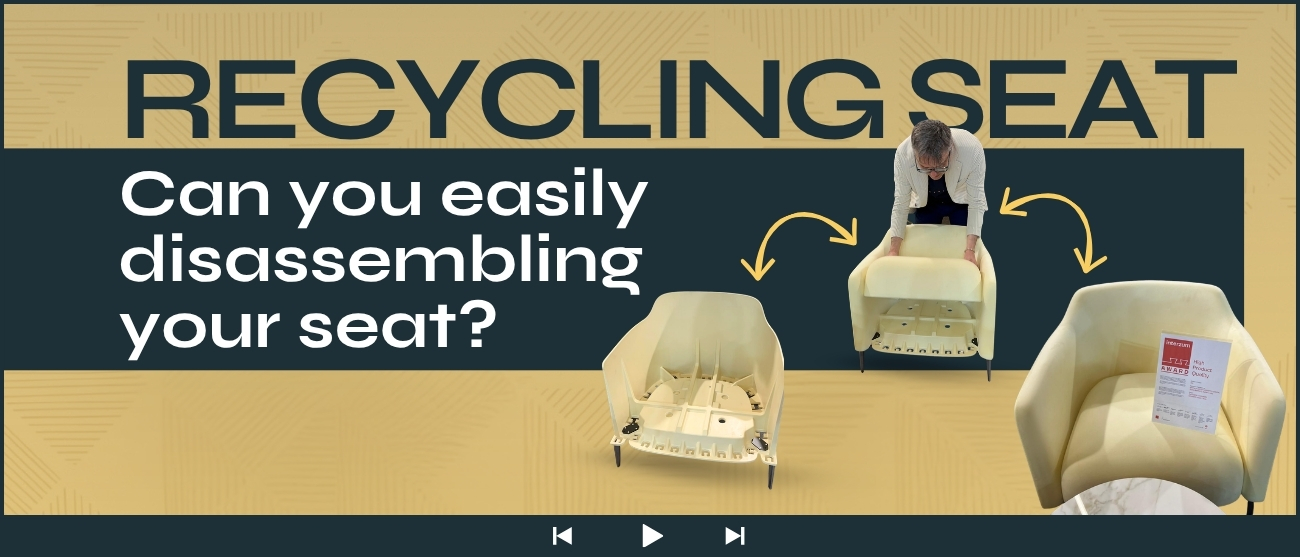
When we talk about sustainable seating, one fundamental aspect is often overlooked: the ability to disassemble products at the end of their lifecycle.

Recycling traditional chairs is far more complex than it may seem. The different materials involved and the way components are assembled make separation processes slow, costly, and ultimately unsustainable.

Sititaly’s approach challenges this logic.

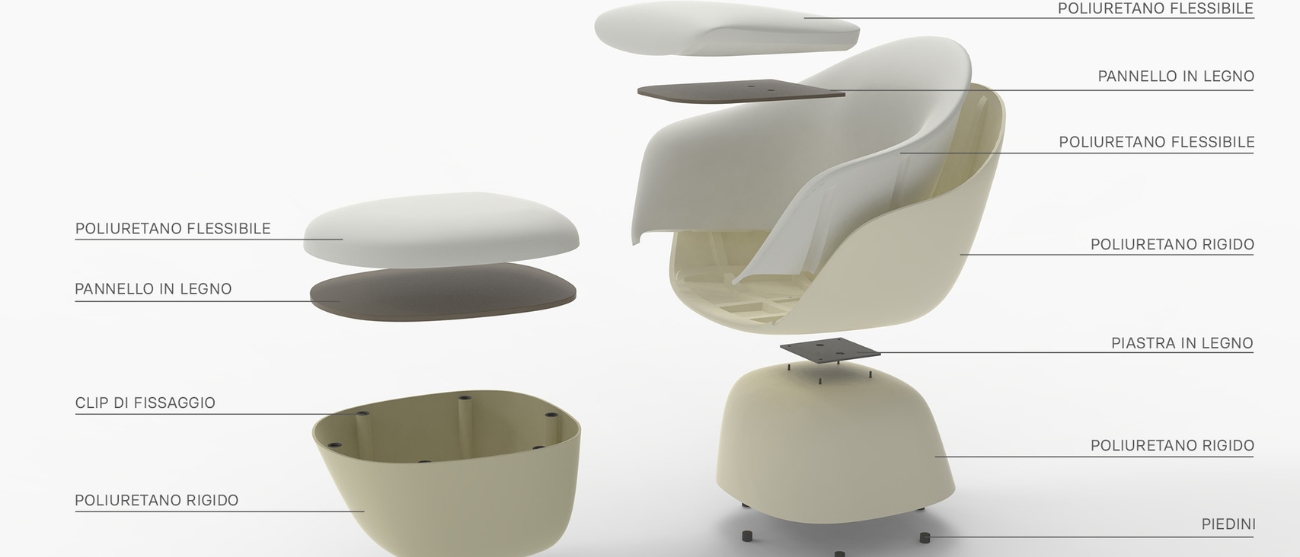
By using structural rigid polyurethane, we eliminate the need for metal frames and permanent bonding, simplifying both assembly and disassembly.

This allows us to create seating solutions that are more durable, designed for easy recycling, and with a significantly reduced environmental impact.

Looking to develop a truly sustainable collection—without compromising on comfort and design?

With Sit With Us, we collaborate with companies and designers to create seating solutions conceived from the outset to respect the planet.

Book your free consultation today and let’s start shaping the future of sustainable design together.

From 2029 on, the European seating market will be regulated by legislation that introduces stringent requirements for durability, repairability and recyclability. The ESPR (Ecodesign for Sustainable Products Regulation), approved by the European Commission in July 2024, represents one of the pillarsof the Green Deal of the Circular Economy Action Plan.

The furniture field is among the priorities of the first Working Plan 2025-2030. According to the official timeline, the specific delegated regulation will be adopted in 2028, while effective implementation – that is, compliance for products placed on themarket – will start in 2029.

ESPR extends the scope of the previous Ecodesign Directive (2009/125/EC), which was limited to energy-related products. It now covers virtually all physical goods sold in the European Union, with a few exceptions regulated separately (foods, drugs, medical products).

The stated goal is twofold: to reduce the environmental impact ofproductsthroughout their life cycle and accelerate the transition towards a circular economy. For the furniture sector, this translates into five main areas of intervention.

The five pillars of compliance

1. Durability and repairability

Products should be designed to withstand time and to allow routine maintenance. The legislation aims to counter planned obsolescence and promote business models based on product longevity.

2. Recycled or bio-based content

The requirement for recycled or renewable material in materials such as polyurethane is estimated to be around 30%. Companies that rely exclusively on virgin fossil fuels will need to rethink their supply chains.

3. Separability of components

To enable selective recycling at the end of life, the design should facilitate the disassembly of different parts such as structure, padding, and cladding. Permanent assemblies with structural adhesives will no longer be compatible with the new standards.

4. Digital Product Passport (DPP)

Each product will be equipped with a “digital passport” containing information on material composition, origin, environmental impact, repair instructions and end-of-life. The system will ensure full traceability along the supply chain.

5. Minimum Environmental Criteria (CAM)

To participate in public tenders -contract, hospitality, office sectors – it will be mandatory todemonstrate compliance with CAM. Those who do not meet these criteria will automatically be excluded from the award procedures.

What happens to those who are not ready

The impact of legislation will not be uniform. Companies that already operate with circular logic will have an immediate competitive advantage. Those who continue to design according to linear models (production-use-disposal) will face significant adjustment costs.

The market surveillance authorities of the Member States will have the power to block the marketing of non-compliantproducts, to order recall and to impose sanctions. The legislation also provides for transparency obligations: companies will have to disclose the quantities of unsold products destroyed and the reasons.

For non-EU producers exporting to the EU market, the same rules will be applied without exception. The Commission has stated that it will carefully assess the implications for trading partners, but confirmed that there will be no exemptions.

How did Sititaly anticipate 2029?

At Sititaly, we have been operating in accordance with the principles that will become mandatory in 2029. Our decision to focus on molded polyurethane seats comes from the belief that this material, when combined with design intelligence, offers the needed attributes for a circular model: monomateriality, separability, durability, and repairability.

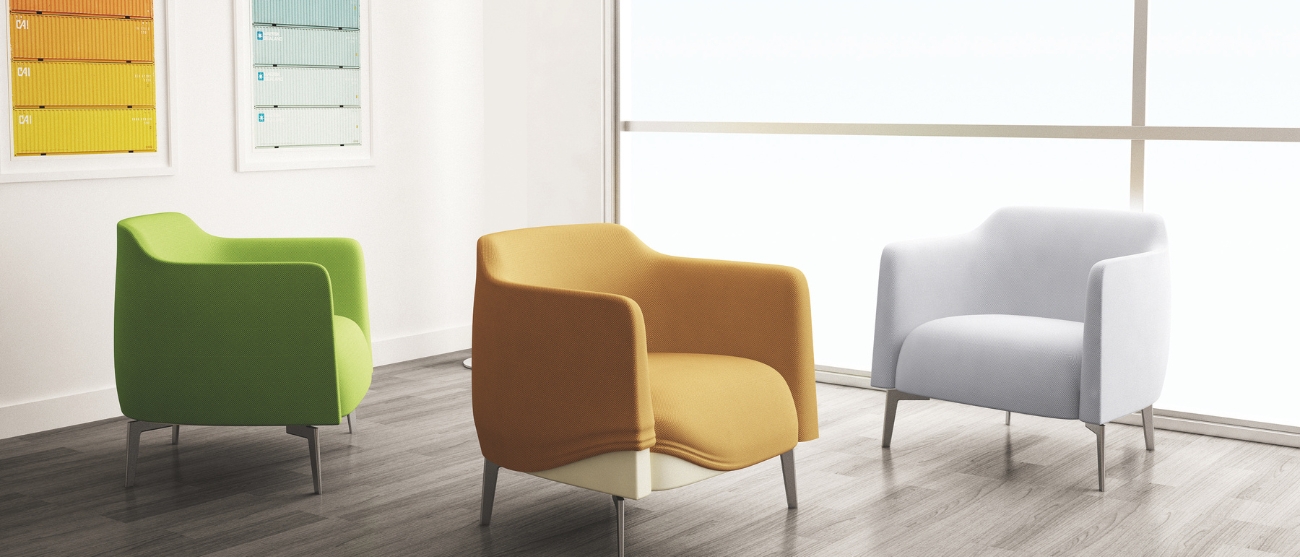
Take our IDA Lounge as an example. It has been designed with a completely reusable rigid polyurethane BIO 7R shell, a removable coating system without the use of glues, and a component that the end consumer can replace independently. This approach corresponds exactly to what ESPR requires in terms of design for disassembly and circular economy.

In terms of materials, we already supply bio-based polyurethane in different percentages: 7R as standard, 20R on request, and30R will be also available soon, anticipating future regulatory requirements. In parallel, we are working on LCA (Life Cycle Assessment) certifications for each of our product lines, with the aim of obtaining complete EPDs (Environmental Product Declaration) that guarantee maximum transparency on environmental impact.

We are not adapting to a regulation. We are building products that will be relevant and competitive when that legislation is fully in place.

Design today to sell tomorrow

There are three years left to prepare. Those who can anticipate will transform a constraint into an advantage. Those who wait risk being out of business.

We at Sititaly are ready to accompany you on this journey. Through our Sit With Us service, we support you in the co-design of chairs that already meet ESPR requirements: from concept stage to 3D mathematics, from prototyping to industrial production.

Contact us to design tomorrow’s session together.

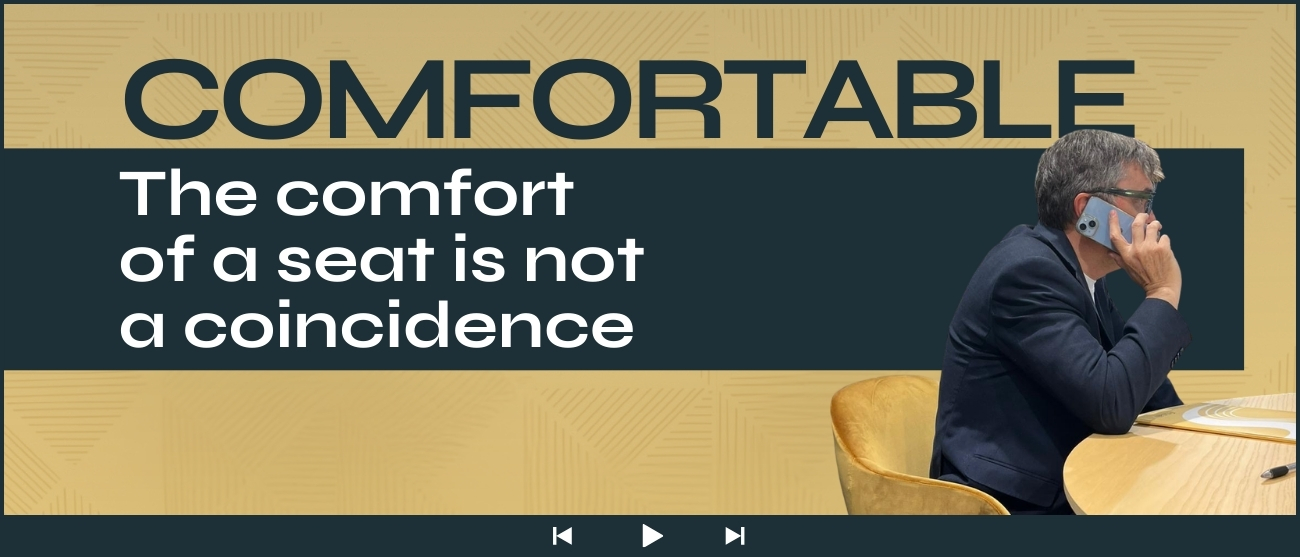
Imagine this situation: you see a beautiful chair right in front of you, you walk over, sit down and… it’s definitely more uncomfortable than it looked.

The comfort of a seat is a matter of well-being, not just aesthetics: to achieve truly comfortable seating, every design choice must be carefully studied in detail.

In the design process, from the shape of the body and the choice of materials are essential factors in ensuring comfort, so it’s not enough to simply add soft padding to a poorly made structure.

At Sititaly, we study and refine every smallest detail of your seating, starting with the use of polyurethane, to guarantee the right balance between support and comfort.

Contact us for a personalized consultation: thanks to our Sit With Us approach, you can ask us any questions you like to learn more about seating comfort and ensure a truly comfortable result.

You have a seating collection in mind. The concept works, the design convinces you… but when you start thinking about materials, production, costs and feasibility, everything becomes more complicated.

Yet there is a way to approach this journey with greater clarity, less waste and simpler decisions: a method born from hands-on experience, working closely with those who every day turn concepts into market-ready seating solutions.

Turning an idea into a seating collection means making the right technical decisions from the very beginning, avoiding costly or difficult-to-produce solutions, and designing with an industrial mindset.

At Sititaly, thanks to over 30 years of experience, we support designers and companies at every stage of the project: from prototyping and material selection to production and finishing.

Do you have an idea for a seating collection and want to understand how to turn it into reality, without wasting time and energy on the wrong choices?

Sit With Us is the starting point: a personalized consultation where we analyze your idea and begin building the most suitable solutions to make it concrete, efficient and ready for the market.

Nowadays, when someone chooses a seat for their office, hotel or home space, they look for four specific things:

  1. Ergonomic comfort and total personalization: people spend hours sitting on a chair and, therefore, request pieces of furniture that fit their body, not the other way around.
  2. Extreme lightness: rearranging spaces, moving furniture and optimizing logistics are daily needs in a rapidly changing world.
  3. Safety for health: hypoallergenic materials, breathable and free of toxic substances that guarantee people’s well-being in indoor environments.
  4. Concrete sustainability: no declarations of intent, but products that are recyclable, repairable or rebuildable.

There is a material that perfectly meets all four of these requirements: polyurethane.

When we sit on a good polyurethane chair, we can perceive what is the result of a real chemistry between materials’ chemistry and industrial design.

It is a feeling that is difficult to describe with words but immediate to comprehend for the body: balanced solidity, precise elastic return, strength held over time that allow the seat to not deform.

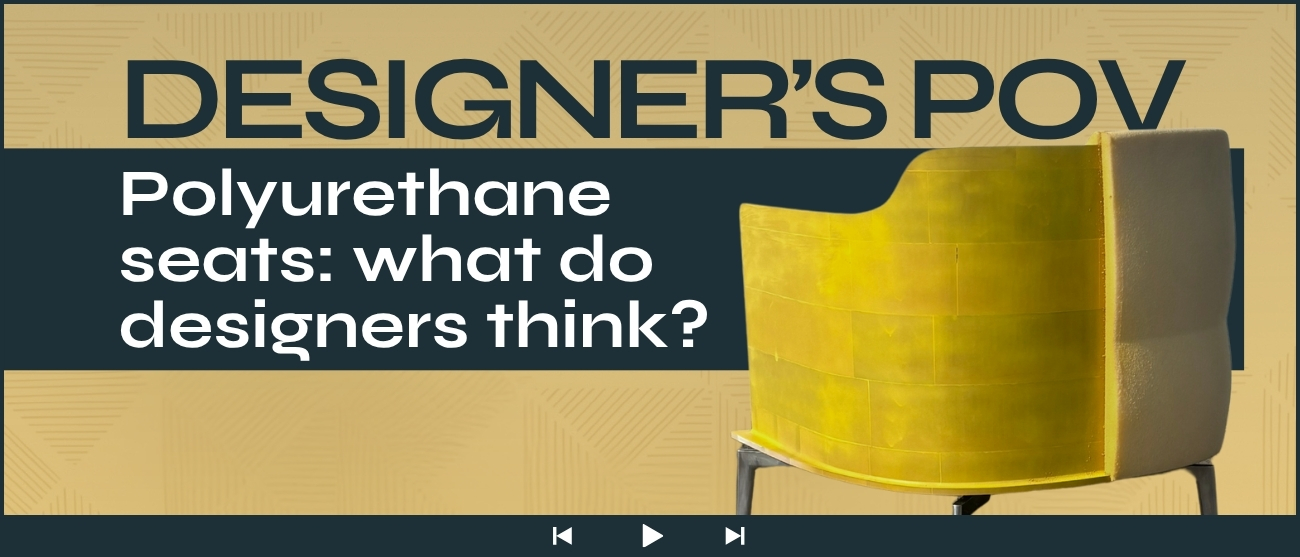
In 2026, polyurethane isno longer just the “hidden heart” of modern seating but has become the undisputed protagonist of a change that involves design, sustainability and industrial performance.  

Especially for those who produce furniture, we no longer talk about a simple “filling” material, but a complete technology that allows lightness, flawless aesthetic performance and – above all – constant production repeatability.

The secret that few companies have understood: All in one material

There is a technological leap that few have really understood and applied: smartly combining the two souls of polyurethane to create entirely mono-material seats.

On the one hand rigid expanded polyurethane, which permanently replaces frames in iron or other metals, offering structural strength with a drastically reduced weight. On the other hand, flexible foams guarantee that superior comfort that only a quality padding can give.

But the real innovation lies in the use of them both together: Sititaly was among the first companies in Italy to apply this approach, designing seats entirely in polyurethane – supporting structure and padding- thus eliminating the complexity of multi-material assemblies and guaranteeing uniformity, consistent precision and performance.

For a manufacturer, the advantages are concrete and immediate: no variability from batch to batch as with wood or metal, only total control over shape, aesthetic performance and comfort. Moreover, lightness that makes handling and logistics infinitely easier.

BioPoliurethane: the silent revolution 

Bio-polyurethane confirms itself as the main character in 2026. 

When we talk about this material, we are not interested in compromises: the performance is identical totraditional polyurethane, but with a radically better environmental profile.

For those who produce seats, this opens decisive scenarios: responding to the increasingly stringent demands of public tenders, distinguishing themselves with products certified with less environmental impact, anticipating European regulations that reward the circular economy.

MDI, CFC-free processes and the future of production safety

There is another technical aspect making a difference in the final quality of the seats in 2026: the type of polyurethane used and the molding process.

MDI BIO polyurethanesfor rigid parts and RECYCLED flexible polyurethane foams for soft parts are now an advanced industry standard.

Much attention is paid to materials that exploit expansion processes that do not include the use of toxic substances such as chlorofluorocarbons (eliminated from the sector already years ago), guaranteeing safety for those who produce and for those who will use the session.

Sititaly: when the vision of the future becomes a real project

Being aware of the potential of polyurethane is one thing. Knowing how to apply it in the design and production of seats is something else.

We at Sititaly work with two major categories of polyurethane, strategically choosing them according to their function:

  • Flexible foam (RECYCLED polyurethane on request) for soft and comfortable padding.
  • Rigid BIO polyurethane foam as a structural material instead of metal frames.

Each seat is designed to take full advantage of the characteristics of this material: we define precise volumes, guarantee ergonomic fit, ensure industrial repeatability withoutvariations in quality. All of this with a green vocation that is a real daily productive choice.

The advantages of Sititaly polyurethane are tangible

  • Durability: it maintains its characteristics over time without deterioration.
  • Versatility: total design freedom on shapes, thicknesses and densities.
  • Eco-friendly: separation of components, no toxic substances, processes that respect the environment.

This approach brings concrete benefits for producers and contract operators:

  • Ready-made or semi-finished seats,with constant quality standards.
  • Support in the development of custom solutions based on polyurethane foam.
  • Possibility of customizing comfort, density and finishing touches without loweringproductivity efficiency.

Our role is that of a bridge: on the one hand the science of materials, with its continuous evolutions, on the other the avant-garde design which seeks formal freedom without compromises on durability and sustainability.

2026 is the year in which the true value of a chair cannot be seen: it is felt. In the comfort that lasts for hours. In the lightness that simplifies everything. In the safety for health. Knowing that you have chosen a material that looks to the future.

If you are looking for a partner who can turn polyurethane into a real competitive advantage for your seating projects, we at Sititaly are ready to work with you.

Contact us for a personal consultation.Throughour Sit With Us service, we accompany you in the design of the perfect seat for your business: from the first stages of the concept to industrial production, combining functionality, style and sustainability.

“The best seats don’t just come from an idea. They are a result of confrontation.”

It is a sentence that Davide often repeats. And in Sititaly, it has become an integral part of the work.

Projects that work out often start like this: someone sits at the table, communicate what they need, what’s wrong, what they imagine… and that’s where everything takes shape.

Thatis because a seat doesn’t have to look beautiful.

It must work every day, for years and years.

It is moved, cleaned, used by different people, often in intensive and high rotation contexts.

For this reason, appearance is not enough.

If designers and manufacturers don’t work side by side from the start, problems emerge quickly: hard-to-manage coatings, out of control costs, last minute changes.

Those working in the sector know it: it takes little to delay times, increase waste and compromise the efficiency of the product.

But there is a substantial difference between designing “for” the client and designing “with” the client.
In the first case, attempts are made.
In the second one, we enter a real co-design logic, where solutions emerge first and problems often do not even arise.

A method that simplifies (and accelerates) the process

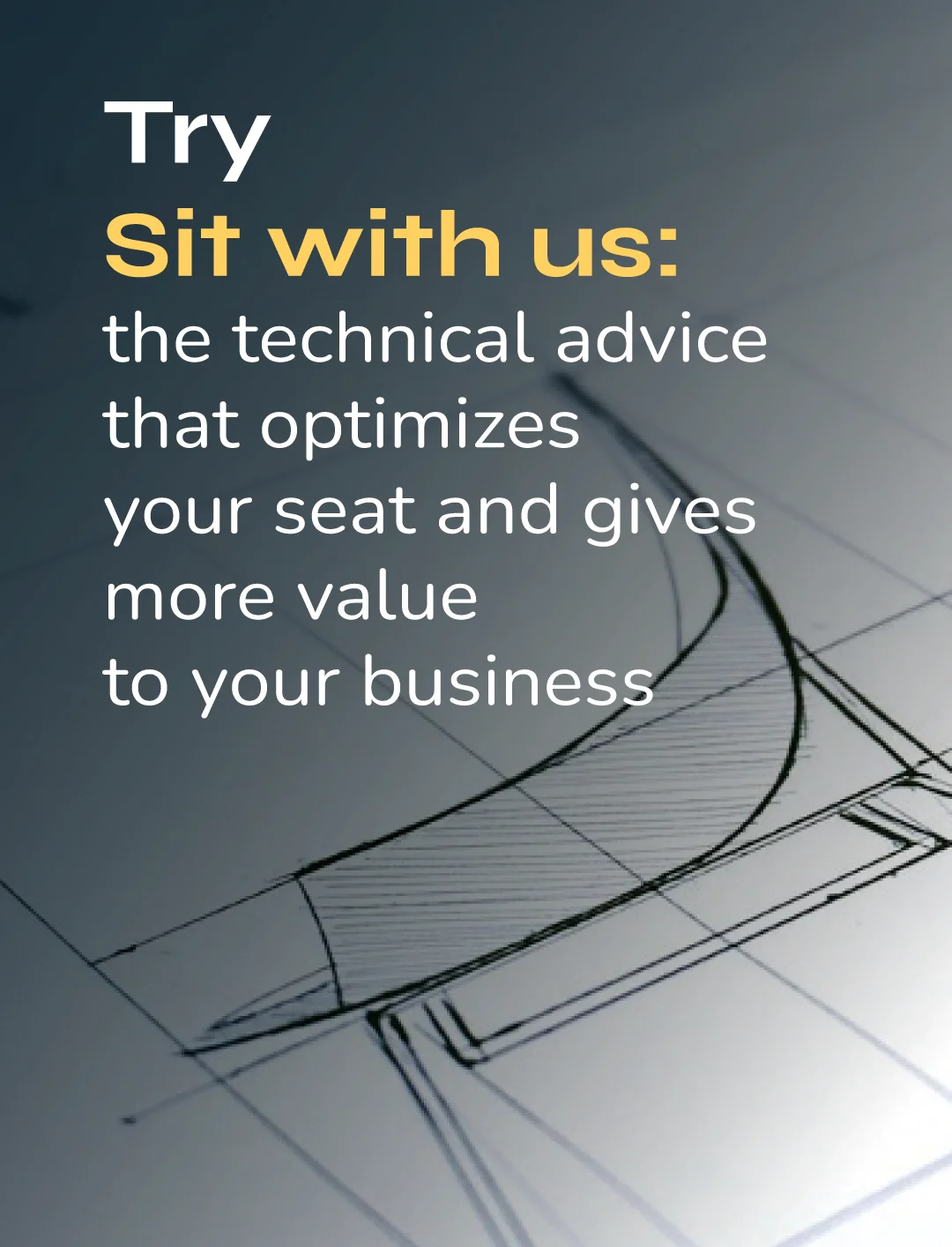
From here comes Sit With Us: the Sititaly service born to make those who design and who produce collaborate, facilitating the co-design process.

It is not a form to be filled in, but a path of continuous comparison.

The shape is studied together, materials are checked, coatings are tested, real tests are made and the shot is corrected if necessary.

Sometimes a single detail is enough to change everything. Some other, it turns out that the best solution is the one no one had yet thought of.

Above all, this approach saves time, materials and unnecessary revisions.

Because you work immediately on a shared, clear and producible project without any “surprises”.

Method before style

Many projects start from an aesthetic idea.

It is normal.

But in production certain curves become complicated, some volumes unmanageable, some couplings unsustainable.

When technical design helps optimizing ideas right from the start:

  • banal (but expensive) mistakes are avoided,
  • the structure is shaped in such a way as to simplify the final coating,
  • waste is reduced,
  • the transition from design to prototype is faster.

An overall saving, which is directly reflected in costs, deadlines and perceived quality.

The difference is the table you sit on

“The sessions that work are born by sitting at the right table”.
This is a daily reality at Sititaly.

Those who come with an idea find a team open to comparison: no formalisms and no distance between who thinks and who does.
Dialogue remains open until the final prototype, because every step counts, and every detail can make the difference between a beautiful design on paper… and a product that actually works.

Over the years, this approach has made Sititaly a trusted partner for many firms and companies. For those looking for tailor-made solutions, without unforeseen events.

Do you want to create a new session?

Let’s talk about it.

With Sit With Us you can build a solid project and consistent with the real use for which it was born.

Contact us for a personalized consultation: let’s see together how to make it sustainable and ready to last.

Subscibe to newsletter

Fill out the form to stay up-to-date on the world of polyurethane seats and the news from Sititaly.